KDP Profit Anatomy: Breaking Down a Book's Unit Economics
Finance
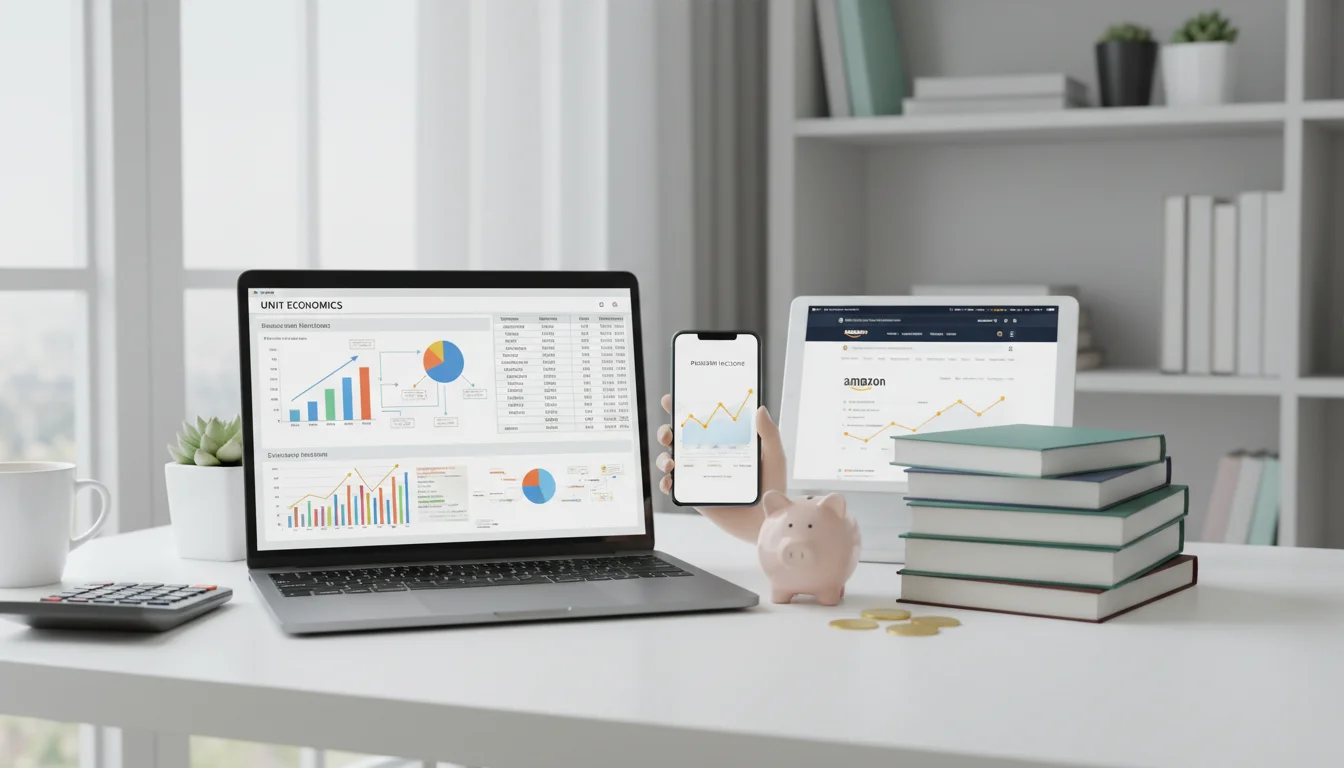
Why Do 95% of Beginners Lose Money on Amazon KDP?
The idea of passive income from selling books on Amazon sounds tempting. You create a product once, upload it to the platform, and it makes you money for years. But the reality is far from this picture. Most aspiring authors and publishers face a harsh truth: their books don't sell, and their ad budget burns up without a trace. The reason is simple – they don't understand the numbers behind the business.
They only see the tip of the iceberg – the royalties – but ignore what lies beneath: the costs of creating a quality product, customer acquisition costs, taxes, and payment delays. It's a game of blind luck. A successful Amazon KDP business isn't about creativity or luck. It's about math. And that math is called unit economics. In this article, we'll dissect the real profit from a single niche book and explain why a systematic approach always beats chaotic attempts to cut corners.
It All Starts with Costs: The True Price of a 'Proper' Book
The biggest mistake a beginner makes is skimping on the foundation. It seems like you can order a manuscript for $100 from a freelancer in the Philippines, design a cover in Canva, and wait for sales to roll in. The result is predictable: 1-star reviews, zero sales, and a banned account. A profitable KDP business starts with investing in a quality product. Let's calculate what that really costs.
Writing and Editing: The Heart of Your Book
A cheap manuscript, written by a non-native speaker or with AI without proper editing, is a guaranteed failure. Amazon readers don't forgive mistakes. They leave scathing reviews that kill a listing forever.
The Beginner's Path: Ordering a manuscript for $1-2 per 100 words from an unvetted freelancer. Result: $200-300 for a 20,000-word book of terrible quality.
The Systematic Approach: Working with professional native-speaking ghostwriters who specialize in your niche. Cost: $600 – $1,000+ for a book. This also includes mandatory proofreading and editing.
This price difference is the cost of avoiding negative reviews and creating a product that people will buy and recommend.
Cover Design and Formatting: Your Business's Packaging
The cover is the first thing a buyer sees. You have two seconds to grab their attention. A DIY or template-based cover screams unprofessionalism and repels 9 out of 10 potential customers. Quality formatting (for both ebook and paperback) ensures a comfortable reading experience and prevents complaints.
The Beginner's Path: Designing the cover yourself or ordering one for $20. Result: The book gets lost among thousands of competitors.
The Systematic Approach: Hiring a designer who specializes in Amazon KDP and understands niche trends. Cost: $150 – $300. Professional formatting: $50 – $100.
Total Cost of a Quality Book
Let's add up the numbers for creating one competitive book:
Writing and Editing: ~$800
Cover Design: ~$200
Formatting: ~$50
Total: ~$1,050. This is the minimum entry barrier if you want to not just publish a book, but build a business around it. Trying to save on these items isn't saving money; it's planning for a loss.
Income and Royalties: How and How Much Amazon Pays
Now for the fun part – income. But here too, there are nuances that beginners often overlook, especially when it comes to paperbacks, which form the backbone of revenue in most niches.
The Paperback Royalty Formula
Amazon pays the publisher 60% of the list price, but first, it subtracts the printing cost. The printing cost depends on the page count, paper type, and color. Let's look at a specific example.
Example:
Your book: 200 pages, black and white interior.
List Price: $14.99.
Printing Cost: ~$4.05 (this varies by marketplace, but it's a realistic figure).
Royalty Calculation Formula:
(List Price * 60%) – Printing Cost = Your Royalty
Let's calculate:
($14.99 * 0.60) – $4.05 = $8.99 – $4.05 = $4.94
So, for every book sold at $14.99, you receive $4.94. This is your gross profit per unit. We will build our entire unit economics model based on this figure.
The Catch: A 60-Day Payout Delay
This is one of the biggest shocks for beginners. Amazon pays royalties on a 60-day delay. This means you won't receive the money from your January sales until the end of March. During this entire period, you have to pay for advertising out of your own pocket. Without a financial buffer for 2-3 months of ad spend, your business will stall before it even starts. This is another reason why KDP is not a no-investment business.
Advertising: The Engine of Your Sales
Hoping for organic sales on Amazon in 2025 is like hoping to win the lottery. Advertising (Amazon Ads) is a mandatory tool for getting your book to the top, collecting data, and scaling. But without understanding the metrics, it just becomes a mindless budget drain.
ACoS and TACoS: The Two Main Metrics
To manage your ads instead of just spending money, you need to track two key metrics:
ACoS (Advertising Cost of Sale): Your ad spend as a percentage of the revenue generated by those ads. Formula: (Ad Spend / Ad Revenue) * 100%. If you spent $20 and made $100 in sales from ads, your ACoS is 20%.
TACoS (Total Advertising Cost of Sale): Your total ad spend as a percentage of your total revenue (including organic sales). Formula: (Ad Spend / Total Revenue) * 100%. This metric shows the overall health of your business and the impact of advertising on organic sales.
At launch, your ACoS might be high (even 100% or more). This is normal. Your goal at this stage isn't to make a profit, but to gather data on effective keywords and boost your book's organic ranking. Over time, as organic sales grow, you'll lower your ACoS to the break-even point and below.
Putting It All Together: A Real Profit Calculation for One Book
Now let's bring all the numbers together and see what the economics of a single book look like in the first month after launch. This is a simulation based on average performance in a non-competitive niche.
Initial Data:
Investment in book creation: $1,050.
List Price: $14.99.
Royalty per sale: $4.94.
Daily ad budget: $25.
First Month Calculation (30 days):
Total ad spend: $25 * 30 = $750.
Sales from ads: Let's assume ads generated 100 sales.
Organic sales (driven by improved ranking from ads): 50 sales.
Total sales for the month: 100 + 50 = 150 copies.
Total income (royalties): 150 * $4.94 = $741.
Let's calculate the net profit for the first month:
$741 (income) – $750 (ad spend) = -$9
Yes, in the first month, you'll likely break even or have a small loss. This is completely normal. You didn't lose money; you invested $750 in data and in boosting your book's organic rankings. Your book is now visible on Amazon.
When Will the Book Break Even and Become Profitable?
Starting from the second or third month, once you have data to optimize your ads and have gathered some initial reviews, the picture changes. You turn off ineffective keywords, and your ACoS drops. Organic sales increase.
Projection for Month 3:
Ad budget remains the same: $750.
Sales from ads (now more efficient): 120 copies.
Organic sales (have grown): 100 copies.
Total sales: 220 copies.
Total income (royalties): 220 * $4.94 = $1,086.80.
Net profit for the month: $1,086.80 – $750 = $336.80.
Now let's calculate the return on your initial investment:
$1,050 (book creation) / $336.80 (monthly profit) ≈ 3.1 months.
This means your book will fully pay for itself in about 4-5 months after launch (including the first break-even month) and will then generate consistent net profit. A single book can generate $300-500+ in net profit per month. Now imagine you have 10 or 50 such books.
KDP is a System, Not a Lottery Ticket
As you can see, the Amazon KDP business has nothing to do with the "upload and forget" illusion. It's a systematic process driven by numbers. Success isn't determined by cutting costs at the start, but by making smart investments in a quality product and skillfully managing your advertising. Each book is a separate asset, a unit whose economics must be calculated.
Trying to build this business without understanding the numbers and without sufficient capital is doomed to fail. You'll just join the ranks of those who became disillusioned with KDP without ever understanding how it really works.
Ready for Personalized Guidance?
Get expert mentoring tailored to your specific publishing goals.